


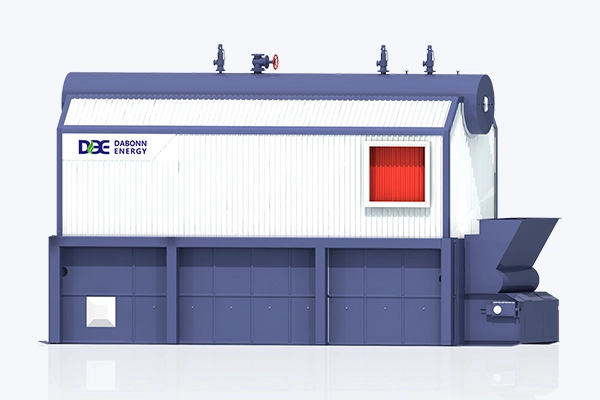
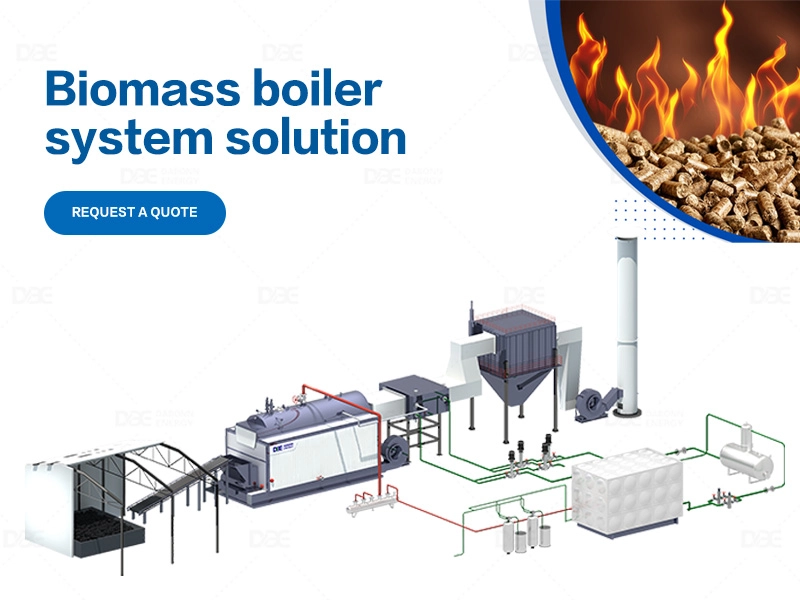
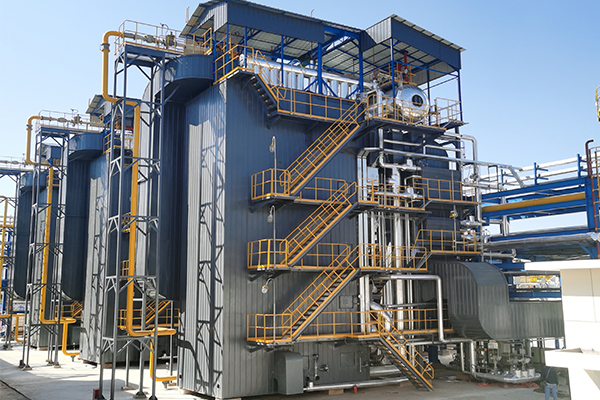
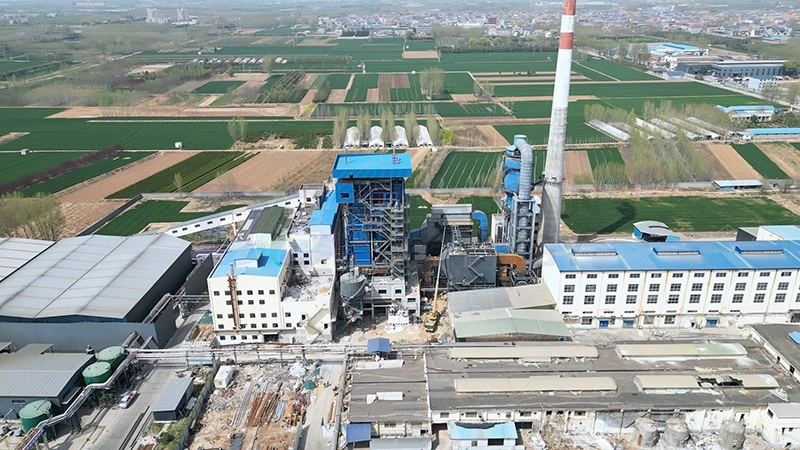
Corn cob fired boiler not only reduces waste produce but also lessens reliance on the traditional fossil fuels, thus helping to reduce environmental pollution.
Low nitrogen environmental protection boiler, built for 20 years

The eccentric layout of the furnace
This series of boilers adopts an eccentric arrangement of the corrugated furnace and pot shell, which can greatly reduce the diameter of the pot shell and reduce the volume of the furnace body and water volume.

Integrated design
Euromonitor-θ7 series boilers are designed to connect the flue, economizer, condenser, and FGR fan into an integrated structure, canceling the installation interface between various components, reducing the difficulty of installation and reducing installation errors, to ensure the overall accuracy of the boiler installation.

Short start-up time
Compared with traditional products, this series of boilers introduces a new type of enhanced heat transfer element, the heat flux density is increased, the design is compact, and the boiler water volume is much smaller than traditional products so that this series of boilers can be finished within 5 minutes.

Modular system
Through parallel combination, multi-machine joint control can be completed, and up to 128 boilers can be controlled at the same time.
 2025-09-18
In the exploration of global sustainability and renewable resource, corn cob fired boiler as an alternative source emerges. This article will introduce detailed advantages, application and market prospect of corn cob fired boiler.
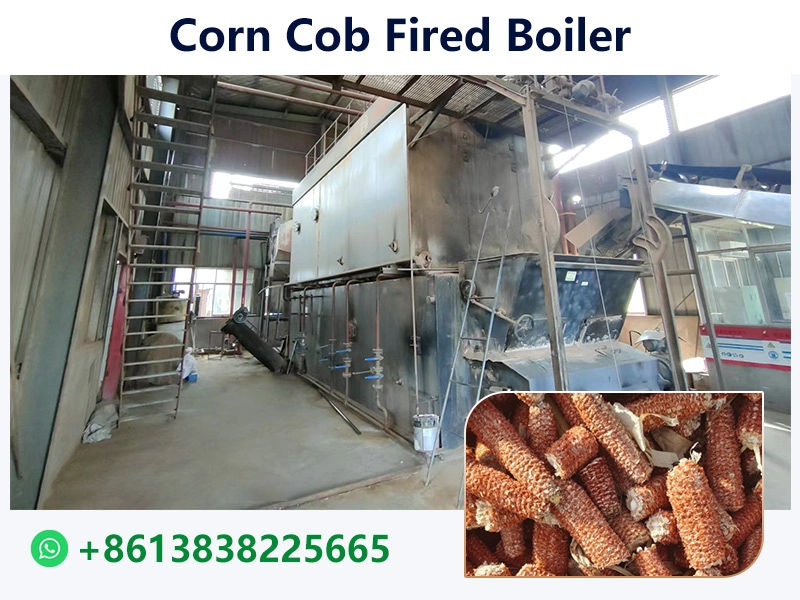
Its environmental friendliness embodies in utilization agricultural waste——corn cob as fuel. It not only reduces waste produce but also lessens reliance on the traditional fossil fuels, thus helping to reduce environmental pollution. Compared with traditional fossil fuels, the pollutants produced by burning corn husks are fewer, making it a more environmentally friendly energy option.
Using corn cob as fuel has a significant cost advantage, especially in some areas where plants abundant corn. Corn cob fuel has characteristics of abundant resource and low price, which can significantly reduce the operating cost of heating and power generation in industry and community.
The design of modern corn cob fired boilers pays attention to energy efficiency, converting most of fuel energy into thermal energy and electrical energy. Advanced combustion technology ensure complete combustion of biomass fuel, achieving maximum energy output.
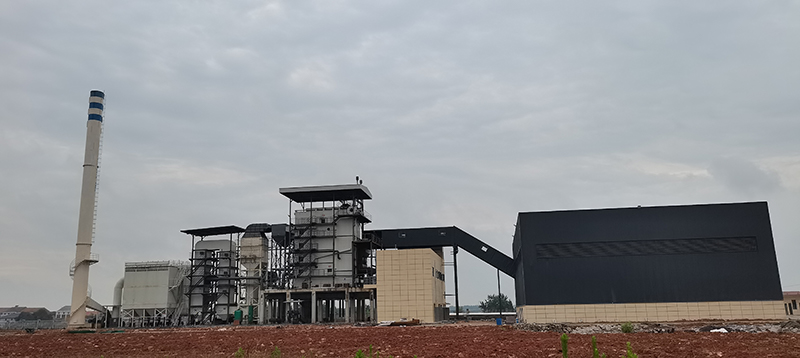
Corn cob fired boiler can usually use other types of biomass fuel, which provides flexibility in terms of fuel sources. This versatility ensures that even if the supply of corn husks is insufficient, other agricultural residues can still be used to keep the boiler running.
Corn cob fired boilers are widely used in process heating in the industrial field. It can provide essential heating for food processing, textile, papermaking and other fields. Its stable heat output and high efficiency make it an ideal choice.
Sometimes corn cob fired boiler is used with turbine for producing electricity. Corn cob fired boilers combined with turbines are suitable for areas with abundant agricultural waste as well as areas in need of decentralized electricity production. The steam produced by the heat of the boiler can turn the turbines and generate electricity.
District Heating
Corn cob fired boilers can also be used for district heating, where the heat from the boiler is piped and used in several buildings for heating large areas. This is an efficient solution and avoids the need for every building to have its own heating system.
In farming communities, corn cob fired boilers can be used to provide heat for drying crops, heating greenhouses, and other agricultural processes. This not only utilizes locally available resources but also reduces the carbon footprint of agricultural operations.
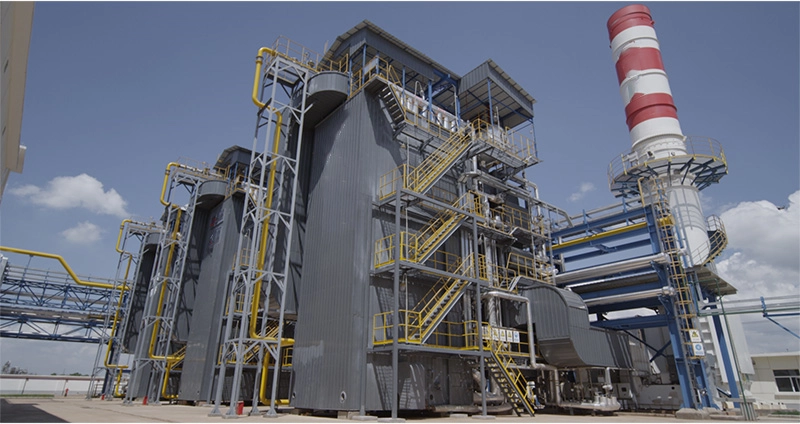
The escalating trend in renewable energy demand is poised to augment the corn cob fired boiler market. The global energy sector is witnessing a surge in biomass usage, in pursuit of carbon emission reduction targets. The international energy sector is seeing a rise in biomass utilization, as countries pursue carbon emission reductions.
Advancements in Technology Advancements in technology are making corn cob fired boiler more preferable. As the technology in boilers is advancing, the combustion control, heat recovery, and automation are improving which in turn is expected to increase the adoption of corn cob fired boiler in various applications.
Renewable energy promotion policies, alongside incentives, support the corn cob fired boiler market. Governmental subsidies, tax incentives, and renewable energy supportive regulations are advancing the adoption of biomass boilers. China’s policy environment encompasses a variety of initiatives to endorse biomass-based energy production. China’s policy environment encompasses a variety of initiatives to endorse biomass-based energy production.
The market for corn cob fired boilers is not limited to regions where corn is a staple crop. The concept of using agricultural waste for energy production can be applied globally, with each region harnessing its locally available biomass resources. This presents an opportunity for the corn cob fired boiler market to enter new regions and countries.
Although there are promising prospects, corn cobs are only available in season and adequate collection and storage systems are required. However, there are opportunities for investment within the biomass supply chain to overcome these challenges. There are also considerable growth opportunities in the corn cob fired boiler market in developing countries.

Corn cob fired boiler as a sustainable and efficient energy solution of utilizing agricultural waste providing thermal energy and power and has significant environmental benefits, cost-effectiveness, and versatility. With technological advancements and policy support for biomass energy, the market for corn cob fired boilers is expected to grow, providing a viable alternative to traditional energy sources.
WhatsApp: +8613838225665
Email: [email protected]
Get in touch now

Phone / Whatsapp / Wechat


| Types | Evaporation (t/h) |
Steam Pressure (MPa) |
Steam Temperature (℃) |
Feed Water Temperature (℃) |
Thermal Efficiency (℃) |
Fuel | Natural Gas Consumption (Nm3/h) |
Power Requirement (V/Hz) |
Electric Power (KW) |
Length * Width * Height (mm) |
Weigh t(t) |
Chimney (t) |
|---|---|---|---|---|---|---|---|---|---|---|---|---|
| θ7-2000 | 4 | ≤1.6 | 204 | 150℃(80%) 20℃(20%) | >95 | Natural gas | 250.4 | 380/50 | 29.5 | 5000 * 2500 * 4200 | 13 | 700 |
| θ7-4000 | 6 | 250.4 | 29.5 | 5000 * 2500 * 4200 | 13 | 700 | ||||||
| θ7-6000 | 10 | 250.4 | 29.5 | 5000 * 2500 * 4200 | 13 | 700 | ||||||
| θ7-8000 | 15 | 250.4 | 29.5 | 5000 * 2500 * 4200 | 13 | 700 | ||||||
| θ7-10000 | 20 | 250.4 | 29.5 | 5000 * 2500 * 4200 | 13 | 700 |

The company that cooperated with FANGKUAI Boiler was a heating company. After several communication and on-site field visits, the two parties determined that FANGKUAI Boiler...
Learn More
The company that cooperated with FANGKUAI Boiler was a heating company. After several communication and on-site field visits, the two parties determined that FANGKUAI Boiler...
Learn More
The company that cooperated with FANGKUAI Boiler was a heating company. After several communication and on-site field visits, the two parties determined that FANGKUAI Boiler...
Learn More
The company that cooperated with FANGKUAI Boiler was a heating company. After several communication and on-site field visits, the two parties determined that FANGKUAI Boiler...
Learn More
If you are interested in our company or products, you can contact with us through online consulting, demand table submission, e-mails and telephones. Our staff shall wholeheartedly provide product information, application knowledge and good service for you.
Hi there!
How are you?
Talk to us on your favourite channels
If you are interested in our company or products, you can contact with us through online consulting, demand table submission, e-mails and telephones. Our staff shall wholeheartedly provide product information, application knowledge and good service for you.
Customer service 01

 Whatsapp

 Email
Email

 Message

 Top
Top