


What Is a Biomass Boiler?
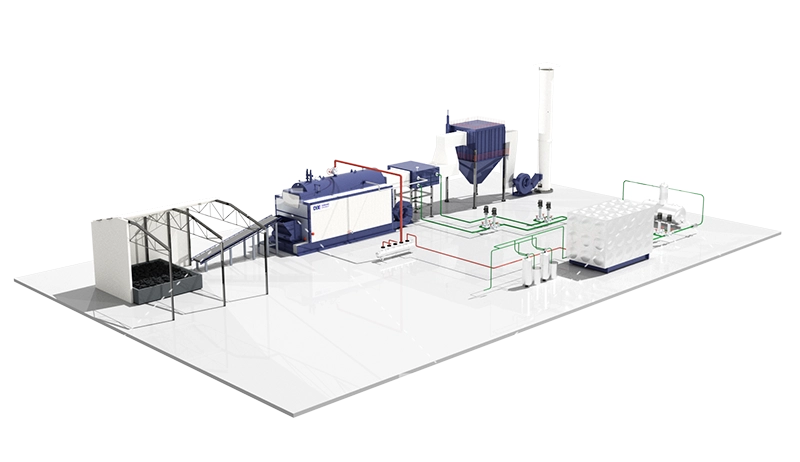
A biomass boiler is an industrial heating system that generates steam or hot water by burning renewable organic materials such as wood chips, biomass pellets, rice husks, or agricultural residues.
Compared with coal or gas boilers, biomass boilers provide:
-
- Lower carbon emissions
- Renewable energy utilization
- Stable industrial heat supply
- Reduced fuel cost in agricultural regions
Modern biomass boilers are widely used in factories, district heating systems, and biomass power plants worldwide.
Why Biomass Boilers Are Growing Rapidly in 2026
Global industries are shifting toward biomass energy because of:
- Carbon neutrality targets
- Rising fossil fuel prices
- Government emission regulations
- Waste-to-energy policies
Biomass fuel forms a near-closed carbon cycle, making it one of the most practical renewable energy solutions for industrial heat generation.
How Does a Biomass Boiler Work?
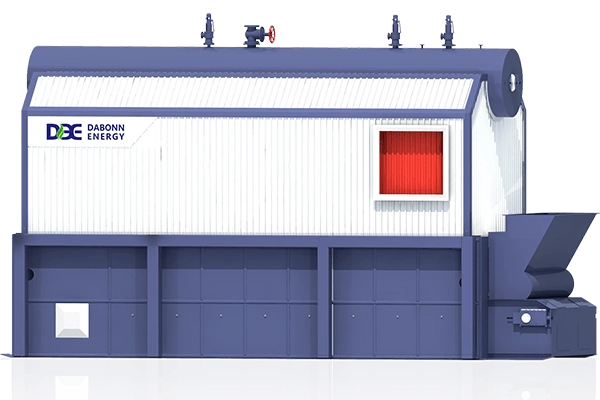
The most common industrial design is the chain grate biomass boiler.
Working Process
- Biomass fuel enters the furnace through an automatic feeding system.
- The moving chain grate transports fuel slowly through combustion zones.
- Fuel passes through several stages:
- Drying
- Ignition
- Volatile combustion
- Char combustion
- Burnout and ash discharge
- Heat transfers through water walls to produce steam.
- Exhaust heat is recovered by economizers and air preheaters.
This continuous combustion method ensures:
- Stable flame
- High efficiency
- Wide load adjustment range
- Reliable long-term operation
Upgrade to a High-Efficiency Biomass Boiler
Contact us today for a customized biomass boiler solution and free energy efficiency assessment. Our expert engineering team provides full support from design to installation.
Main Components of a Biomass Boiler
A modern industrial biomass boiler includes:
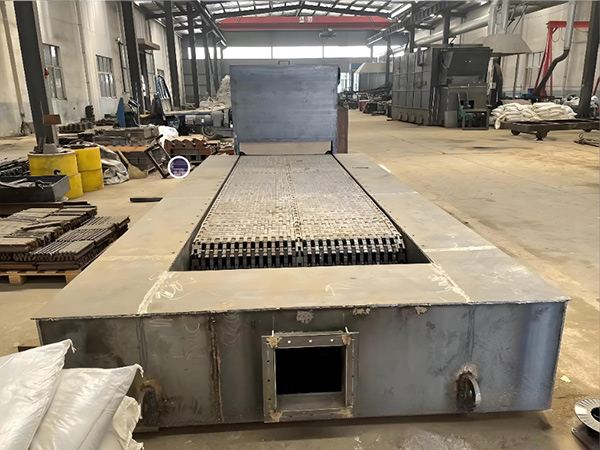
Furnace & Chain Grate
Supports fuel combustion and ensures uniform air distribution.
Steam Drum
Separates steam from water and stabilizes pressure.
Water Wall System
Absorbs radiant heat and protects furnace structure.
Superheater
Produces high-temperature superheated steam for turbines or industrial processes.
Economizer
Recovers flue gas heat to preheat feedwater.
Air Preheater
Improves combustion efficiency using waste heat.
These systems form a multi-stage heat recovery structure that significantly increases thermal efficiency.
Types of Biomass Boilers (Selection Guide)
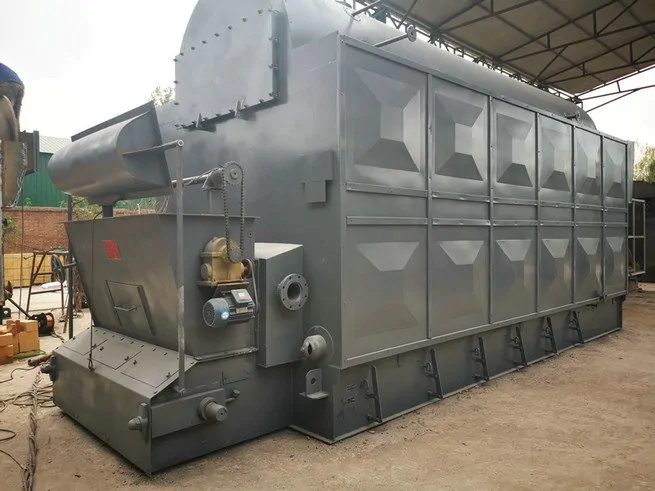
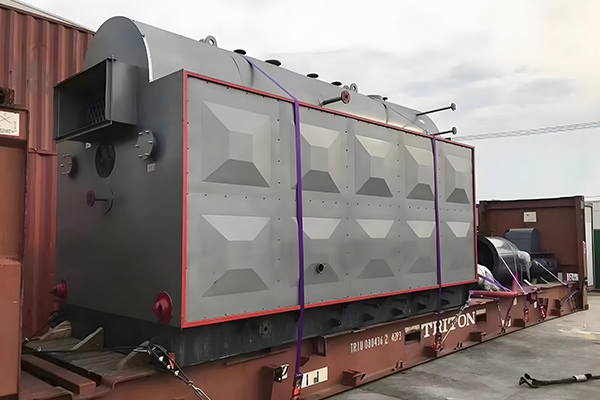
DZL Biomass Boiler
Best for small and medium industries.
- Single drum structure
- Fast installation
- Lower investment cost
- Compact design
Ideal for food factories and small manufacturing plants.
SZL Biomass Boiler
Most widely used industrial biomass boiler.
- Double drum water-tube design
- Higher efficiency
- Stable continuous operation
- Suitable for various fuels
Recommended for textile, paper, and processing industries.
SHL Biomass Boiler
Designed for large capacity applications.
- High steam parameters
- Long-term continuous operation
- Suitable for large industrial projects
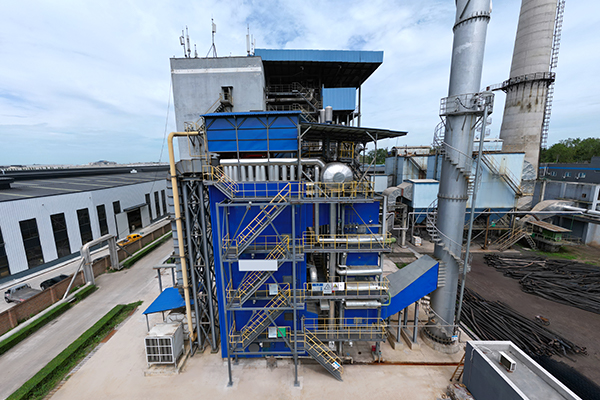
DHL Biomass Boiler
Used in biomass power plants and CHP systems.
- Ultra-large capacity
- High automation
- Compact high-efficiency layout
Ideal for combined heat and power (CHP).
Biomass Boiler Fuels Explained
Typical biomass fuels include:
- Wood chips
- Sawdust
- Rice husk
- Palm shell
- Straw
- Biomass pellets
Key Fuel Characteristics
| Property | Impact on Operation |
|---|---|
| High volatile matter | Easy ignition |
| Low sulfur | Low emissions |
| Variable moisture | Affects efficiency |
| Alkali metals | Possible slagging |
Recommended industrial fuel condition:
- Moisture content: <15%
- Pelletized fuel preferred for automation.
Advantages of Industrial Biomass Boilers
1. Renewable & Low Carbon Energy
Biomass produces near carbon-neutral emissions.
2. Wide Fuel Adaptability
Can burn multiple agricultural residues.
3. Stable Continuous Operation
Load adjustment typically ranges from 30%–110%.
4. Lower Operating Cost
Local biomass fuel often costs less than fossil fuels.
5. Easy Maintenance
Simple mechanical structure and reliable operation.
Industrial Applications
Biomass boilers are widely used in:
- Food processing plants
- Wood and furniture factories
- Textile dyeing industry
- Paper mills
- District heating systems
- Biomass power generation
Biomass Boiler vs Coal Boiler
| Feature | Biomass Boiler | Coal Boiler |
|---|---|---|
| Carbon emission | Very low | High |
| Fuel type | Renewable | Fossil |
| Environmental compliance | Easier | Difficult |
| Fuel handling | Cleaner | Dusty |
| Sustainability | High | Low |
Why Choose Dabonn Energy Biomass Boilers?
Dabonn Energy provides complete biomass energy solutions including:
- DZL & SZL biomass boiler systems
- Customized fuel solutions
- Automatic feeding systems
- Emission control integration
- Overseas installation support
Our systems are designed for:
High efficiency
Stable combustion
Long service life
International industrial standards

Frequently Asked Questions (FAQ)
Are biomass boilers environmentally friendly?
Yes. Biomass fuel releases CO₂ absorbed during plant growth, forming a near carbon-neutral cycle.
What is biomass boiler efficiency?
Modern industrial biomass boilers typically achieve 80–88% thermal efficiency, depending on fuel quality and heat recovery configuration.
What fuel is best for a biomass boiler?
Biomass pellets with moisture below 15% provide the most stable combustion and automation performance.
Can a coal boiler be converted to biomass?
Yes. Many chain grate coal boilers can be upgraded by modifying the grate, air system, and feeding equipment.
Conclusion
Biomass boilers have become a key technology in global industrial decarbonization. With stable performance, flexible fuel options, and strong environmental benefits, they represent one of the most practical renewable heating solutions available today.
For industries seeking sustainable steam generation, biomass boiler systems offer an optimal balance between efficiency, cost, and environmental responsibility.


