


In modern production and life, boiler is a key equipment to provide heat. Widely used in hotel heating, factory production and hospital disinfection. But different scenarios have various requirements for heating performance, pressure level and operational stability. So it is very important to distinguish commercial boilers and industrial boilers, which is a core premise to ensure equipment and improve energy efficiency.
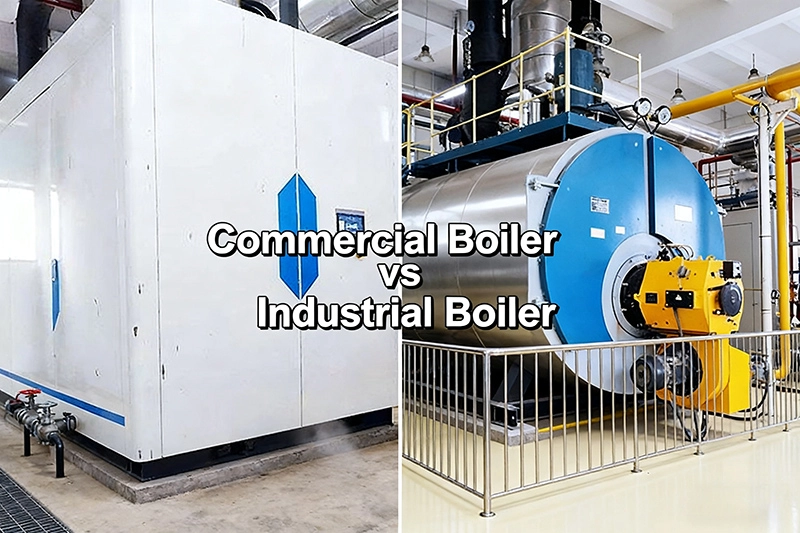
Definition and Classification of Commercial and Industrial Boilers
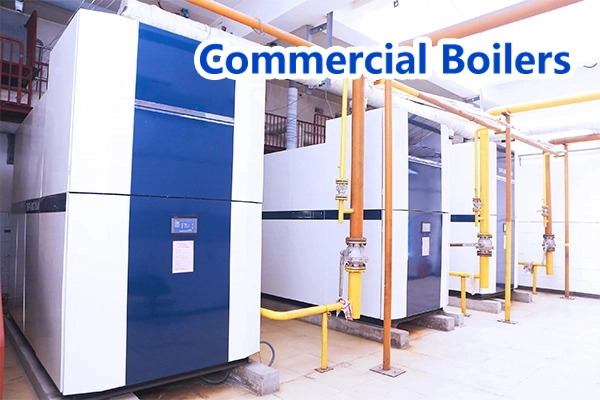
Commercial boilers are mainly used for heating and hot water supply in commercial buildings such as hotels, schools and hospitals. hey usually have lower thermal power and pressure. Commercial boilers are designed to be more energy-efficient and environmentally friendly. They aim to meet the comfort and economic needs of commercial buildings.
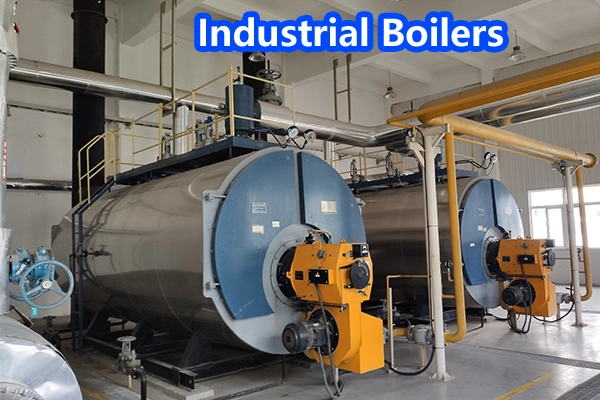
Industrial boiler: Widely used in iron and steel plants, chemical plants, power plants and other industrial production settings. Industrial boilers must supply large amounts of steam or heat for continuous production. Therefore, they often have higher thermal power and larger capacity. Their working pressure is also greater than that of commercial boilers.
Application Scenario Comparison
Commercial boiler requirements: Suitable for relatively small thermal energy and intermittent venues, such as hotels in the tourist season need a lot of hot water, Demand decreases in the off-season. Commercial boilers typically have a shorter running time and relatively low maintenance costs.
Industrial Boiler: In industrial production, the boiler needs a long time, stable operation to meet production needs. For example, in chemical production, the steam generated by the boiler is used to drive the reactor and other equipment, and its stability and efficiency are very important to the whole production process.
Technical Features and Design Differences
Industrial boilers usually have higher thermal efficiency. Their large-scale and high-load operation allows more efficient fuel utilization. For example, some advanced industrial boilers use efficient combustion technology to make the fuel burn more fully and reduce energy waste.
Pressure and capacity: Industrial boilers usually need to withstand higher pressure and have greater capacity, To meet the industrial production of large quantities of steam or heat demand. In contrast, commercial boilers are relatively small in pressure and capacity to accommodate the size and use requirements of commercial premises.
Environmental Performance Analysis
With the improvement of environmental protection consciousness, the emissions standards for boilers are becoming increasingly strict. Industrial boilers produce large-scale emissions. They must comply with stricter environmental regulations. Advanced flue gas treatment technologies are used to reduce pollutant emissions.
Carbon neutral and sustainable development: In the context of the pursuit of carbon neutral, both boilers are constantly exploring ways to reduce carbon emissions. Commercial boilers often use renewable energy, such as solar-assisted heating systems. Industrial boilers focus on improving clean combustion efficiency and using alternative fuels like biomass.
Cost-effectiveness and Operational Lifespan
Initial investment and operating costs of commercial boilers are relatively low, but due to their possible frequent start-up and shutdown, Long-term running costs may be higher. Although the initial investment of industrial boiler is large, it can achieve lower unit operation cost in the long term through optimal design and efficient operation.
Engine maintenance and life: Due to its complex structure and high strength operation, industrial boilers require more frequent and professional maintenance, but its design life is usually long. Commercial boiler structure is relatively simple, low maintenance costs, but its lifespan may be greatly affected by the environment and frequency.
Conclusion
When choosing a boiler, enterprises need to comprehensively consider factors. Key factors include parameters, cost, and environmental protection. Parameters refer to core indicators such as thermal power, pressure, and capacity. Environmental protection means meeting local emission standards and carbon reduction requirements.

If you have any needs, welcome to contact us in your free time. WhatsApp: +8613838225665


