


A wood fired boiler uses wood-based biomass fuel such as wood chips, firewood, sawdust, or wood pellets to generate steam or hot water. In 2026, industrial wood fired boilers typically produce steam at $12–30 per ton, making them one of the most cost-effective alternatives to gas or diesel systems.
Wood fired boilers are widely used in textile factories, food processing plants, paper mills, and other industries requiring continuous steam or thermal energy.
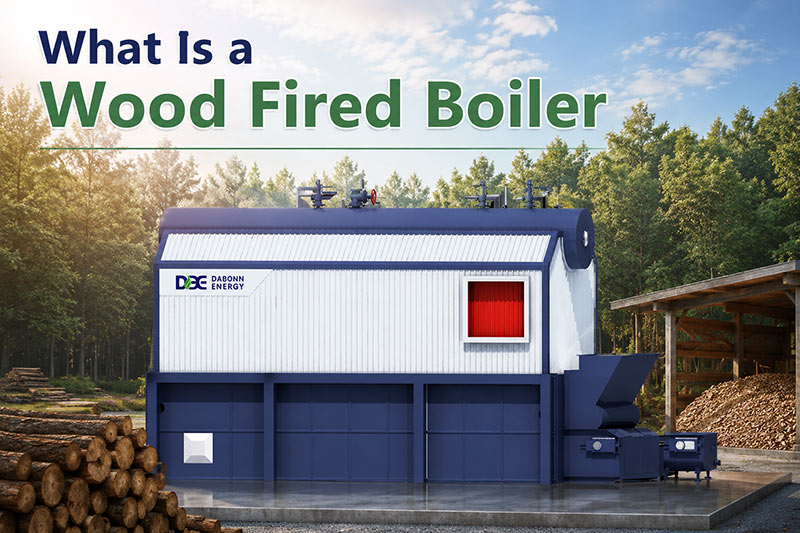
What Is a Wood Fired Boiler?
A wood fired boiler is a type of biomass boiler that burns wood fuel to produce heat energy. The generated heat is transferred through a heat exchanger to create steam or hot water for industrial processes.
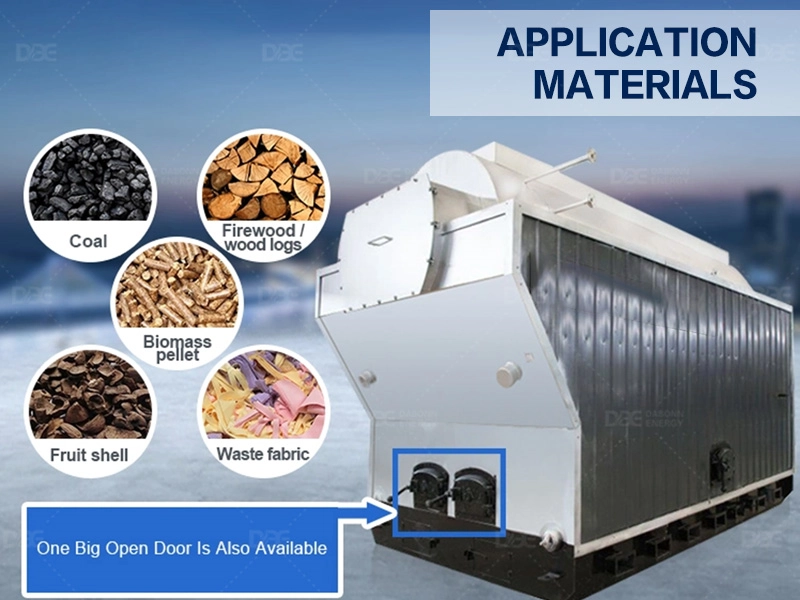
Common wood fuels include:
- Wood chips
- Wood pellets
- Firewood
- Sawdust
- Wood waste
Compared with fossil fuel systems, wood fired boilers provide lower fuel cost and improved sustainability.
How Does a Wood Fired Boiler Work?
The working principle of a wood fired boiler is relatively simple:
- Wood fuel enters the combustion chamber
- The fuel burns and releases heat energy
- Heat transfers through boiler tubes
- Water converts into steam or hot water
- Flue gas exits through the chimney system
Modern wood fired boilers use automatic feeding and combustion control systems to improve efficiency and reduce emissions.
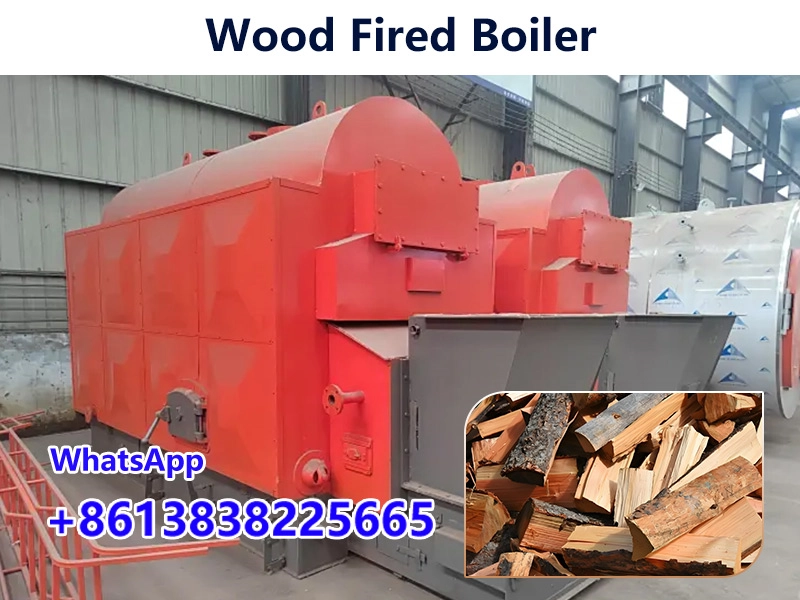
Wood Fired Boiler Operating Cost
The operating cost of a wood fired boiler depends mainly on:
- Fuel price
- Boiler efficiency
- Fuel moisture content
- Steam demand
| Fuel Type | Average Steam Cost |
|---|---|
| Wood Chips | $12–20 / ton steam |
| Wood Pellets | $18–30 / ton steam |
| Natural Gas | $30–55 / ton steam |
| Diesel | $60–90 / ton steam |
Because wood fuel is often locally available, many factories achieve significant long-term fuel savings.
Wood Fired Boiler Fuel Consumption
Typical fuel consumption depends on the heating value of wood fuel and boiler efficiency.
| Fuel Type | Fuel Consumption per Ton Steam |
|---|---|
| Wood Chips | 200–260 kg |
| Wood Pellets | 120–160 kg |
| Sawdust | 220–280 kg |
Dry wood fuel with low moisture content improves combustion efficiency and reduces consumption.
Wood Fired Boiler Efficiency
Modern industrial wood fired boilers usually achieve 80%–88% thermal efficiency.
Efficiency depends on:
- Combustion system design
- Fuel quality
- Air-fuel ratio
- Heat recovery systems
Advanced systems equipped with economizers can further reduce energy loss.
Dabonn Energy is a boiler manufacturer, power station project integration supplier and EPCO contractor.
Mainly dealing in the following products.
1、Gas steam boiler
2、Hot water boiler
3、biomass pellets boiler
4、Steam generator
5、Boiler accessories
6、Steam turbine
7、Generator
8、Power plant
Upgrade to a High-Efficiency Biomass Boiler
Contact us today for a customized biomass boiler solution and free energy efficiency assessment. Our expert engineering team provides full support from design to installation.
Applications of Wood Fired Boilers
Wood fired boilers are commonly used in:
- Textile factories
- Food processing plants
- Paper mills
- Wood product manufacturing
- Chemical industries
- Agricultural processing
Industries with access to wood waste or biomass fuel benefit the most from wood fired systems.
Advantages of a Wood Fired Boiler
- Lower fuel cost
- Renewable energy source
- Reduced dependence on fossil fuel
- Stable long-term operating expenses
- Suitable for continuous industrial steam demand
Disadvantages of a Wood Fired Boiler
- Requires fuel storage space
- Higher maintenance than gas boilers
- Ash handling required
- Fuel moisture affects performance
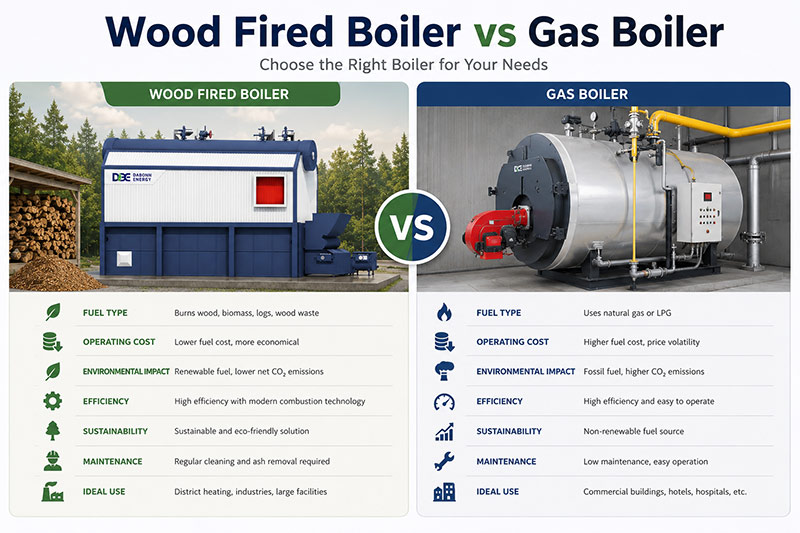
Wood Fired Boiler vs Gas Boiler
| Factor | Wood Fired Boiler | Gas Boiler |
|---|---|---|
| Fuel Cost | Low | Medium–High |
| Initial Investment | Higher | Lower |
| Operating Cost | Lower | Higher |
| Automation | Medium–High | High |
| Environmental Impact | Renewable | Fossil fuel |
How Much Does a Wood Fired Boiler Cost?
Industrial wood fired boiler prices vary depending on capacity and automation level.
| Boiler Capacity | Estimated Price Range |
|---|---|
| 1–2 Ton | $8,000–25,000 |
| 4–6 Ton | $30,000–80,000 |
| 10–20 Ton | $100,000–300,000+ |
Additional costs may include installation, fuel feeding systems, dust collectors, and chimney systems.
Conclusion
Wood fired boilers remain one of the most economical industrial heating solutions in 2026. With low operating cost, renewable fuel supply, and stable long-term energy pricing, they are increasingly replacing traditional fossil fuel boilers in many industries.
Factories with continuous steam demand and access to wood-based biomass fuel can achieve significant energy savings and fast return on investment.
Frequently Asked Questions (FAQ)
What fuel can a wood fired boiler use?
Wood fired boilers can use wood chips, wood pellets, firewood, sawdust, and other wood waste materials.
How efficient is a wood fired boiler?
Most modern industrial systems achieve 80%–88% thermal efficiency.
Is a wood fired boiler environmentally friendly?
Yes. Wood fuel is considered renewable biomass energy and can reduce dependence on fossil fuels.
How much fuel does a wood fired boiler consume?
Fuel consumption typically ranges from 120 kg to 280 kg per ton of steam depending on fuel type and boiler efficiency.
Is a wood fired boiler cheaper than gas?
In many industrial applications, wood fired boilers have significantly lower operating costs than gas boilers.
Authoritative References
- International Energy Agency (IEA) – Biomass Energy Reports
- U.S. Department of Energy (DOE) – Industrial Boiler Systems
- Food and Agriculture Organization (FAO) – Biomass Fuel Studies
- World Bank – Renewable Industrial Energy Programs
The engineering principles and efficiency data in this article follow internationally recognized industrial energy methodologies.


