


Quick Answer:
In 2026, biomass boilers typically produce steam at $12–35 per ton, while natural gas boilers average $30–55 per ton. Biomass systems require higher initial investment but offer significantly lower long-term operating costs when biomass fuel is locally available.
This guide compares biomass and gas boilers from investment cost, operating expense, efficiency, fuel stability, and long-term return on investment (ROI).
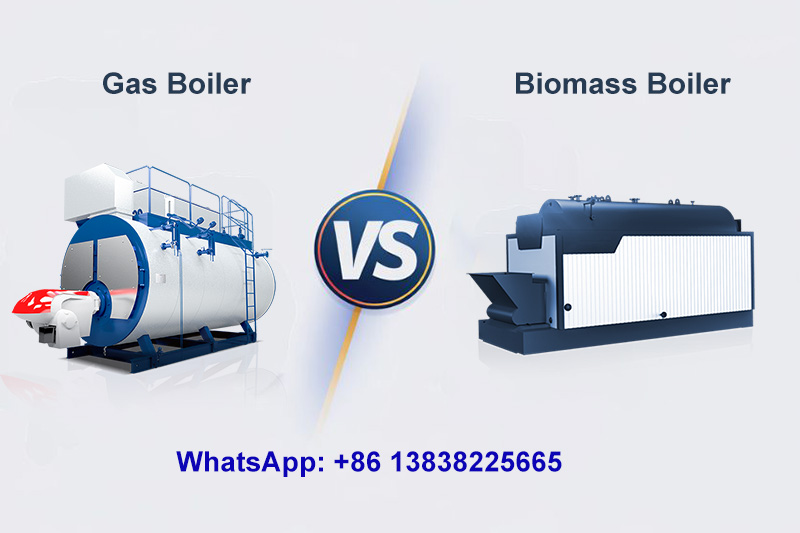
Biomass Boiler vs Gas Boiler: Cost Overview
| Cost Factor | Biomass Boiler | Gas Boiler |
|---|---|---|
| Initial Investment | High | Low |
| Fuel Cost | Low | Medium–High |
| Operating Cost | $12–35 / ton steam | $30–55 / ton steam |
| Fuel Price Stability | Stable (local fuel) | Market dependent |
| Automation Level | Medium–High | High |
| Payback Period | 2–4 years | Short initial, higher lifetime cost |
Initial Investment Cost Comparison
Gas boilers generally require lower upfront investment because they do not need fuel storage or handling systems. Installation is simpler when natural gas infrastructure already exists.
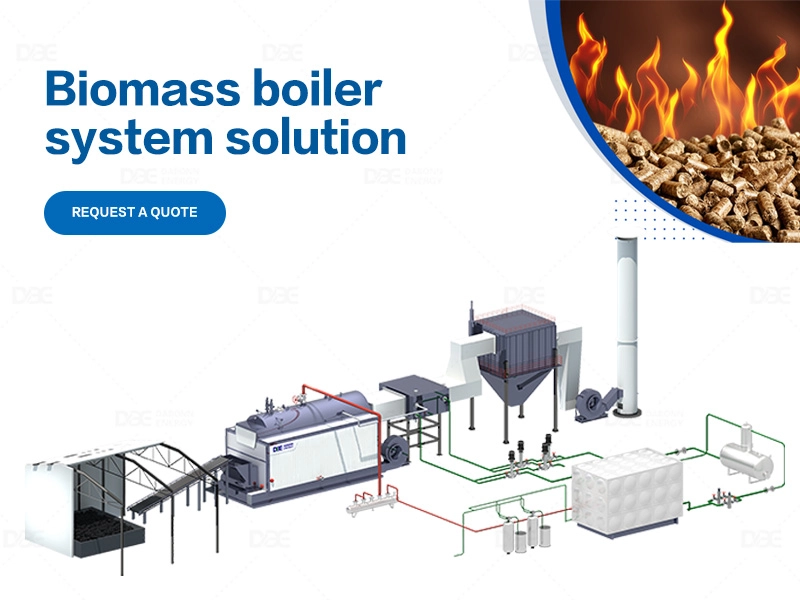
Biomass boilers require additional systems including:
- Fuel feeding system
- Storage and conveying equipment
- Dust collection system
- Ash handling equipment
As a result, biomass boiler projects typically cost 20–50% more initially than equivalent gas boiler systems.
Operating Cost Comparison
The major economic advantage of biomass boilers comes from fuel price.
Typical Fuel Prices (Global Industrial Average)
| Fuel Type | Average Price | Steam Cost Impact |
|---|---|---|
| Wood Chips | $50–80 / ton | Low |
| Rice Husk | $40–70 / ton | Very Low |
| Natural Gas | $8–14 / MMBtu | Medium–High |
Because biomass fuel is often locally sourced agricultural residue, operating expenses remain more predictable compared with gas prices influenced by global energy markets.
Example Operating Cost Calculation
Scenario: 10 TPH steam demand, 8,000 operating hours/year.
- Biomass steam cost: $18 per ton
- Gas steam cost: $42 per ton
Annual Steam Production:
10 × 8,000 = 80,000 tons steam/year
Annual Fuel Cost:
- Biomass: 80,000 × $18 = $1.44 million
- Gas: 80,000 × $42 = $3.36 million
Annual Savings Using Biomass:
$1.92 million per year
Efficiency Comparison
| Boiler Type | Typical Efficiency |
|---|---|
| Modern Biomass Boiler | 80–88% |
| Gas Boiler | 90–95% |
Although gas boilers achieve higher combustion efficiency, lower biomass fuel cost usually results in cheaper steam production overall.
Environmental and Regulatory Considerations
- Biomass fuel is considered carbon-neutral in many energy policies.
- Gas boilers produce fewer particulates but rely on fossil fuel supply.
- Many regions provide incentives for renewable biomass energy projects.
When Is a Biomass Boiler Better?
- Stable biomass fuel supply nearby
- High steam consumption factories
- Long-term operation (5+ years)
- Rising fossil fuel prices
When Is a Gas Boiler Better?
- Limited installation space
- Small or intermittent steam demand
- Existing gas pipeline infrastructure
- Fully automated operation required
ROI and Payback Period
Despite higher installation cost, biomass boilers typically achieve payback within 2–4 years due to fuel savings. Facilities operating continuously benefit the most from biomass conversion.
Upgrade to a High-Efficiency Biomass Boiler
Contact us today for a customized biomass boiler solution and free energy efficiency assessment. Our expert engineering team provides full support from design to installation.
Conclusion
Choosing between a biomass boiler and a gas boiler depends primarily on fuel availability and long-term energy strategy. Gas boilers offer simplicity and lower initial cost, while biomass boilers provide substantially lower operating expenses and improved energy independence.
For industries with continuous steam demand, biomass boilers are often the more economical solution over the equipment lifecycle.
Frequently Asked Questions (FAQ)
Is biomass cheaper than gas for steam production?
Yes. In most industrial applications, biomass steam costs are 30–60% lower than gas when fuel supply is stable.
Why do biomass boilers cost more initially?
Additional fuel handling, storage, and emission control systems increase installation complexity compared with gas boilers.
Which boiler has lower maintenance cost?
Gas boilers typically require less daily maintenance, while biomass systems need ash removal and fuel management.
Can a factory switch from gas to biomass?
Yes. Many facilities retrofit steam systems to biomass boilers to reduce long-term fuel expenses and improve sustainability performance.
Authoritative Industry References
- International Energy Agency (IEA) – Industrial Energy Efficiency Reports
- U.S. Department of Energy (DOE) – Steam System Best Practices
- Food and Agriculture Organization (FAO) Biomass Energy Resources Studies
- World Bank Industrial Energy Optimization Programs
The comparison principles in this article follow internationally recognized industrial energy evaluation methodologies.


