


Biomass boiler fuel consumption typically ranges from 120 to 280 kg per ton of steam. A typical biomass boiler consumes 120–150 kg of biomass fuel per ton of steam for high-calorific fuels like wood pellets, and 200–280 kg per ton for lower-calorific fuels such as wood chips or rice husk. Actual consumption depends on boiler efficiency, fuel moisture, and steam pressure.
This guide explains how to calculate biomass fuel consumption accurately using engineering formulas and provides practical examples for industrial applications.
Biomass Boiler Fuel Consumption Overview
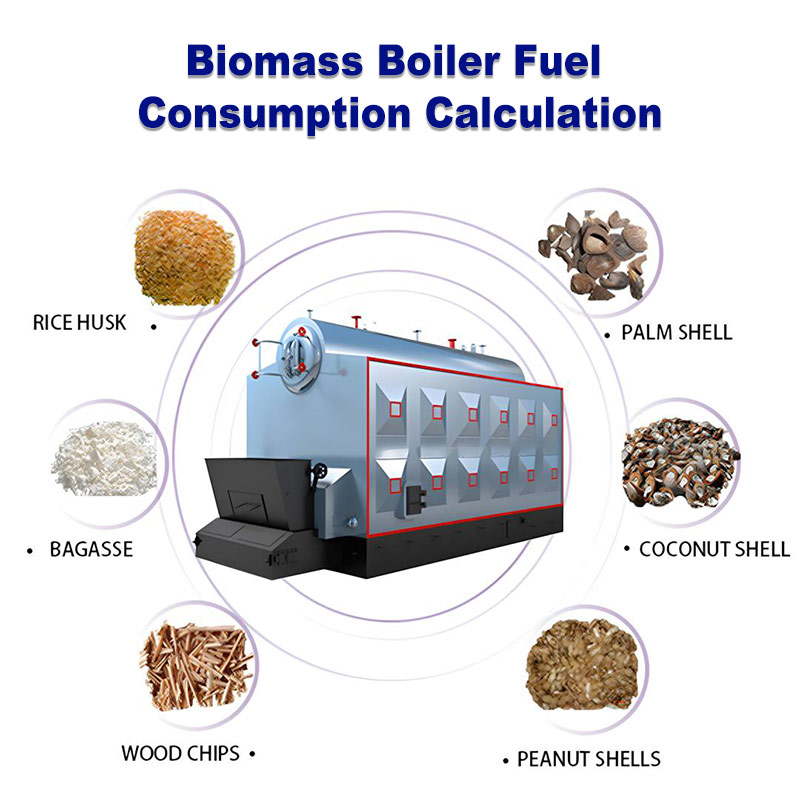
| Fuel Type | Heating Value (kcal/kg) | Fuel Consumption (kg/ton steam) |
|---|---|---|
| Wood Pellets | 4,000–4,500 | 120–150 kg |
| Wood Chips | 3,000–3,500 | 200–260 kg |
| Rice Husk | 2,800–3,200 | 220–280 kg |
| Palm Shell | 3,800–4,200 | 150–200 kg |
*Values are based on industrial biomass boilers with 80–88% efficiency.
Fuel Consumption Calculation Formula
The standard engineering formula used to calculate biomass fuel consumption is:
Fuel Consumption (kg/ton steam) = Steam Energy ÷ (Boiler Efficiency × Fuel Heating Value)
Where:
- Steam Energy: ~650,000 kcal per ton of steam
- Boiler Efficiency: typically 0.80–0.88
- Fuel Heating Value: kcal per kg of biomass fuel
Step-by-Step Calculation
Example: Wood chips with heating value of 3,200 kcal/kg and boiler efficiency of 85%
Step 1: Calculate usable energy
Effective energy = 0.85 × 3,200 = 2,720 kcal/kg
Step 2: Calculate fuel required
Fuel consumption = 650,000 ÷ 2,720 ≈ 239 kg per ton of steam
This result matches real industrial operating data.
Upgrade to a High-Efficiency Biomass Boiler
Contact us today for a customized biomass boiler solution and free energy efficiency assessment. Our expert engineering team provides full support from design to installation.
Quick Calculation Rule (Engineering Shortcut)
Fuel Consumption ≈ 150–280 kg biomass per ton of steam
This simplified rule is widely used for preliminary project estimation.
Fuel Consumption per Hour by Boiler Capacity
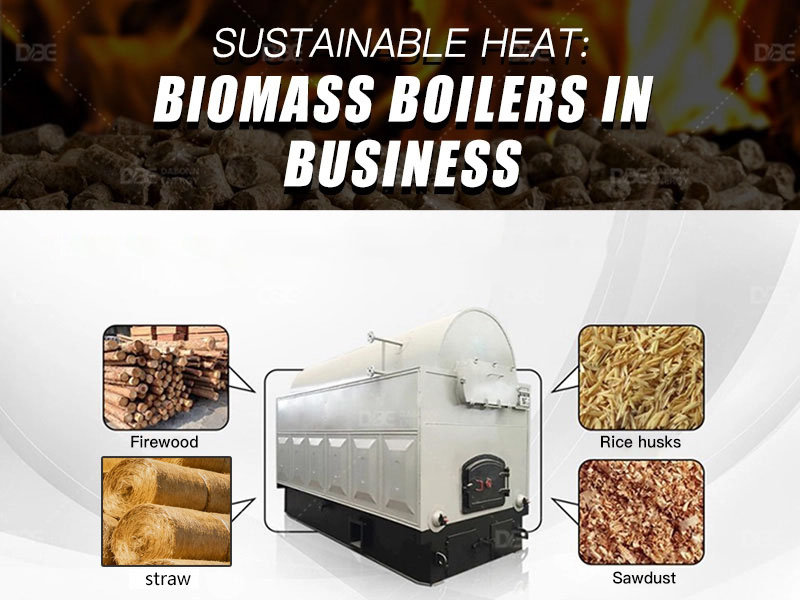
| Boiler Capacity | Fuel Consumption per Hour |
|---|---|
| 1 Ton | 120–280 kg |
| 2 Ton | 240–560 kg |
| 4 Ton | 480–1,120 kg |
| 10 Ton | 1.2–2.8 tons |
Factors Affecting Biomass Fuel Consumption
1. Fuel Moisture Content
High moisture reduces combustion efficiency. Moisture above 20% can increase fuel consumption by 10–25%.
2. Boiler Efficiency
Modern biomass boilers achieve 80–88% efficiency. Poor maintenance lowers efficiency and increases fuel usage.
3. Steam Pressure and Temperature
Higher pressure steam requires more energy, increasing fuel consumption.
4. Combustion Control
Proper air-fuel ratio ensures complete combustion and reduces waste.
Example Industrial Scenario
Scenario: 6-ton biomass steam boiler using wood chips
- Fuel consumption per ton: 240 kg
- Total hourly consumption: 6 × 240 = 1,440 kg/hour
This value is used to calculate hourly operating cost and fuel storage requirements.
How to Reduce Biomass Fuel Consumption
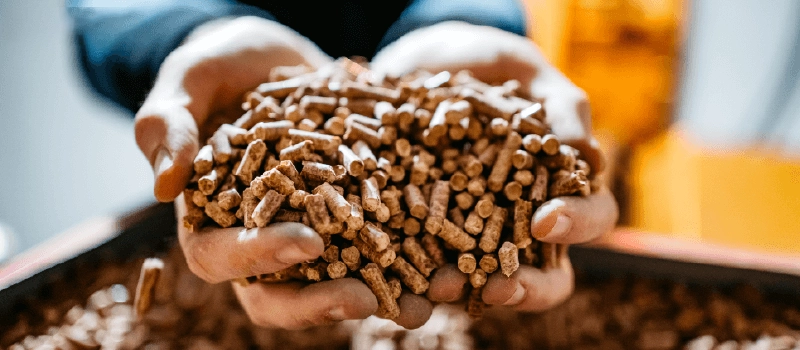
- Use low-moisture, high-quality fuel
- Maintain proper combustion air settings
- Install economizer for heat recovery
- Operate boiler at stable load
- Clean heat exchange surfaces regularly
Summary
In industrial applications, biomass boilers typically consume 120–280 kg of fuel per ton of steam depending on fuel type and boiler efficiency. Accurate calculation of fuel consumption is essential for estimating operating cost and system performance.
Frequently Asked Questions (FAQ)
How much biomass fuel is needed per hour?
A 1-ton boiler uses about 120–280 kg of biomass fuel per hour depending on fuel quality.
Why does fuel consumption vary?
Fuel type, moisture content, and boiler efficiency are the main factors affecting consumption.
Which biomass fuel is most efficient?
Wood pellets provide the highest efficiency due to low moisture and high calorific value.
Can fuel consumption be reduced?
Yes. Improving combustion control and using dry fuel significantly reduces fuel usage.
Is biomass consumption higher than gas?
Yes in volume, but biomass is much cheaper, resulting in lower overall operating cost.
Authoritative References
- International Energy Agency (IEA) – Industrial Energy Efficiency Reports
- U.S. Department of Energy (DOE) – Steam System Optimization
- Food and Agriculture Organization (FAO) – Biomass Energy Studies
- World Bank – Industrial Energy Programs
This calculation follows widely accepted industrial boiler engineering principles.


