


Comparative Analysis of Winged Tubes and Rifled Tubes for Heat Transfer Enhancement in Boiler Systems
Abstract
Enhanced heat transfer techniques are widely applied in modern boiler systems to improve thermal efficiency and reduce energy consumption. Among these, rifled tubes and winged tubes represent two different structural approaches to augment convective heat transfer. This study provides a comparative analysis of their heat transfer performance, flow characteristics, and practical applications. Results indicate that winged tube geometries may achieve higher overall heat transfer coefficients under certain operating conditions due to increased surface area and improved turbulence distribution.
1. Introduction
Boiler efficiency is strongly influenced by the effectiveness of heat exchange between combustion gases and working fluids. Conventional smooth tubes often exhibit limited heat transfer performance due to laminar sublayer formation and insufficient turbulence near the wall.
To address these limitations, enhanced tube geometries have been developed, including rifled tubes (internally grooved) and winged tubes (externally extended surfaces). While rifled tubes primarily enhance internal flow mixing, winged tubes aim to increase external heat transfer area and modify flow patterns on the gas side.
2. Heat Transfer Mechanisms
2.1 Rifled Tubes
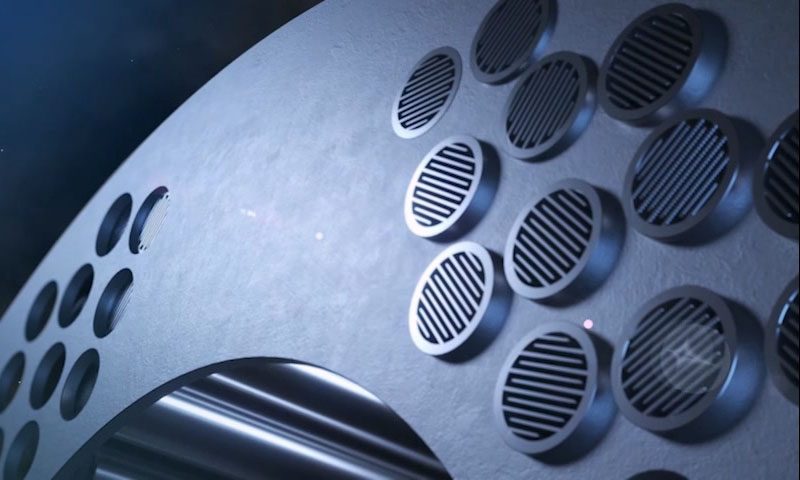
Rifled tubes incorporate helical grooves along the inner wall, which induce swirl flow and disrupt boundary layer development. This results in:
- Increased turbulence intensity
- Improved fluid mixing
- Enhanced internal convective heat transfer
However, these benefits are often accompanied by increased pressure drop and manufacturing complexity.
2.2 Winged Tubes
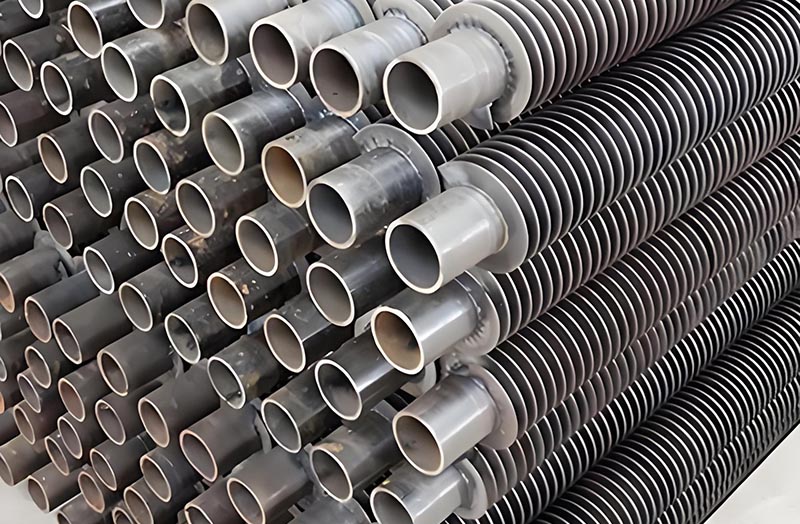
Winged tubes (also referred to as finned or extended-surface tubes) feature protruding structures on the outer surface. These structures interact with cross-flow gases and generate localized turbulence.
Key mechanisms include:
- Expansion of effective heat transfer surface area
- Flow separation and reattachment
- Boundary layer disruption on the gas side
Compared with rifled tubes, winged tubes primarily enhance external heat transfer performance.
3. Performance Comparison
3.1 Heat Transfer Coefficient
Under comparable operating conditions, winged tubes often demonstrate higher overall heat transfer coefficients due to combined effects of surface area increase and turbulence enhancement in flue gas flow.
3.2 Pressure Drop Considerations
Rifled tubes generally introduce higher internal pressure losses due to swirl flow, whereas winged tubes may increase external flow resistance depending on fin geometry and spacing.
3.3 Fouling and Maintenance
Winged tubes can exhibit different fouling behavior depending on particle deposition characteristics. In some configurations, increased turbulence may reduce fouling accumulation; however, complex geometries may also require more careful maintenance strategies.
4. Application Scenarios
- Rifled tubes are commonly used in water-wall tubes and evaporators where internal boiling heat transfer is critical.
- Winged tubes are widely applied in economizers and air preheaters where gas-side heat transfer dominates.
In systems where flue gas heat recovery is the primary objective, winged tubes may provide superior performance.
5. Discussion
The selection between rifled and winged tube designs depends on system constraints, including:
- Fluid properties
- Flow regime
- Allowable pressure drop
- Fouling conditions
Recent developments suggest that hybrid optimization strategies, combining internal and external enhancement techniques, may further improve system performance.
6. Conclusion
Both rifled tubes and winged tubes offer effective methods for enhancing heat transfer in boiler systems. Rifled tubes are more suitable for improving internal convective heat transfer, while winged tubes provide significant advantages in gas-side heat exchange due to increased surface area and flow disturbance.
In applications prioritizing overall heat recovery efficiency, winged tube configurations may offer superior thermal performance.
Author Information
Rachel focuses on industrial heat transfer and boiler system optimization.
References
- Webb, R. L., & Kim, N. H. Principles of Enhanced Heat Transfer.
- Bergman, T. L. et al. Fundamentals of Heat and Mass Transfer.
- Incropera, F. P. et al. Introduction to Heat Transfer.
- Various studies on enhanced boiler tube performance and extended surface heat exchangers.


